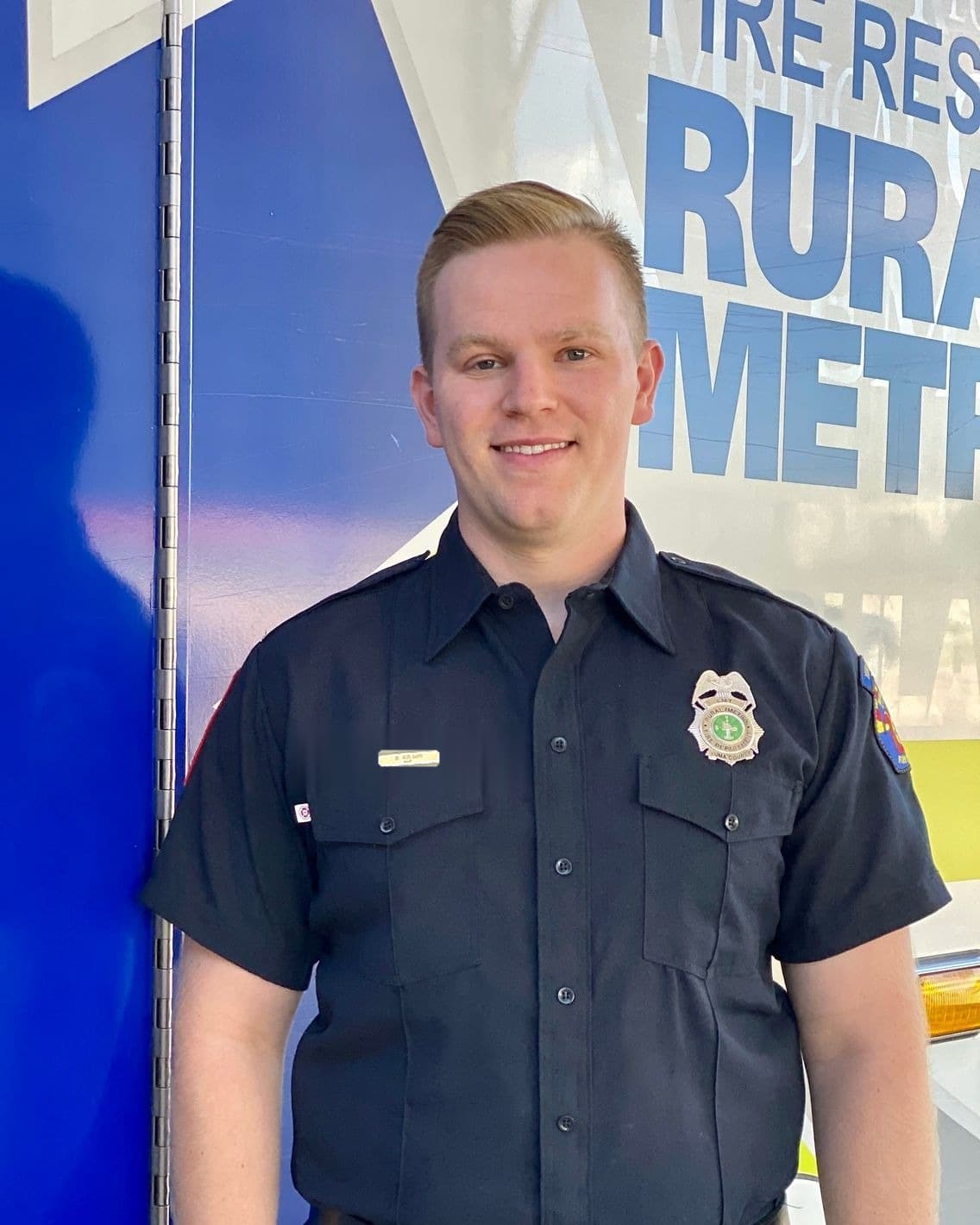
I’ve watched hundreds of students fail the NREMT for the same reason.
I’ve tutored EMT, AEMT, and Paramedic students for years, backed by six years of hands-on experience as a Paramedic. Most of them didn’t fail because they didn’t know the material — they failed because nobody taught them how the NREMT actually asks questions.
Semester after semester, I watched capable students walk out of their EMT or Paramedic class knowing the material, then go fail the NREMT — sometimes two or three times. The gap was never their knowledge of anatomy, pharmacology, or protocols. It was that nobody had taught them how to read a National Registry question, eliminate distractors, and find the “most correct” answer among several that all sound reasonable.
So I stopped assuming students needed more content and started teaching the method instead — reading the question stem first, following the psychomotor sheet’s order of operations, and treating every practice question as a chance to learn why an answer is right, not just which letter it is.
That method comes from six years in EMS — two as an EMT with a fire department, and the rest as a Paramedic with a fire department and a private ambulance company — plus time spent assisting in proctoring National Registry EMT and Paramedic practical exams and teaching BLS, ACLS, and PALS in the classroom. Along the way I’ve personally tutored hundreds of EMT, AEMT, and Paramedic students one-on-one.
Whether you’re prepping for the EMT or Paramedic exam, on your first attempt or your sixth, you’re facing the same test with the same question style — and often the same gap in how your class taught you to face it.
I built this platform to put that method in front of more students than I can reach one at a time — grounded in the real NREMT content outline, kept current as the exam changes, and honest about what it does and doesn’t know.

Brennan
Founder, NREMT Tutor · Experienced Paramedic
It’s a pattern that shows up again and again in my reviews: students who’d failed the NREMT two or three times finally passed after we worked through how to break down the question style itself — not more content, just the missing method. This platform is that exact process, made repeatable at scale.
The method behind it
It’s the same play I run in one-on-one sessions, built to run at scale: find your weakest categories first, teach you to understand the concepts instead of memorizing answers, then keep pointing you at whatever’s actually holding your score back.
Find your gaps
A short diagnostic shows your weakest categories before you waste a minute studying the wrong things.
Understand the concepts
Lessons and a cited AI tutor teach you why an answer is right — not just which letter to memorize.
Build to exam day
Progress tracking keeps pointing you at the next weakest area, so your score compounds.
Tutor explains it the way I actually explain it
Most study apps bolt a generic chatbot onto their question bank. Tutor is built on the specific explanations, analogies, and corrections I use in real 1-on-1 sessions — pulled from actual tutoring transcripts, not written by the AI itself. Here’s a real example, unedited:
Student asks
Why do blood vessels leak fluid in distributive shock?
Tutor answers
Think of a Chinese finger trap. Pulled tight, its woven fibers interlock closely and nothing leaks through the sides — that’s a constricted vessel, fluid stays contained. Widened, those same fibers spread apart and go loose, so anything flowing through leaks out the sides — that’s a dilated vessel: it becomes permeable and fluid leaks into the surrounding tissue. That leaked fluid is what drives the swelling and the drop in blood pressure you see in every form of distributive shock — anaphylactic, septic, and neurogenic alike.
Not a script — Tutor reuses the explanations that have actually worked on real students, the same ones I use live. Ask it something yourself →
What’s inside
Want a human in your corner?
Beyond the self-study tools, 1-on-1 tutoring is available for techs who want to work through tough concepts live. First session is free.
See where you stand
Start with the free diagnostic — no credit card, about five minutes.
Take the free diagnostic